




12 de August, 2026
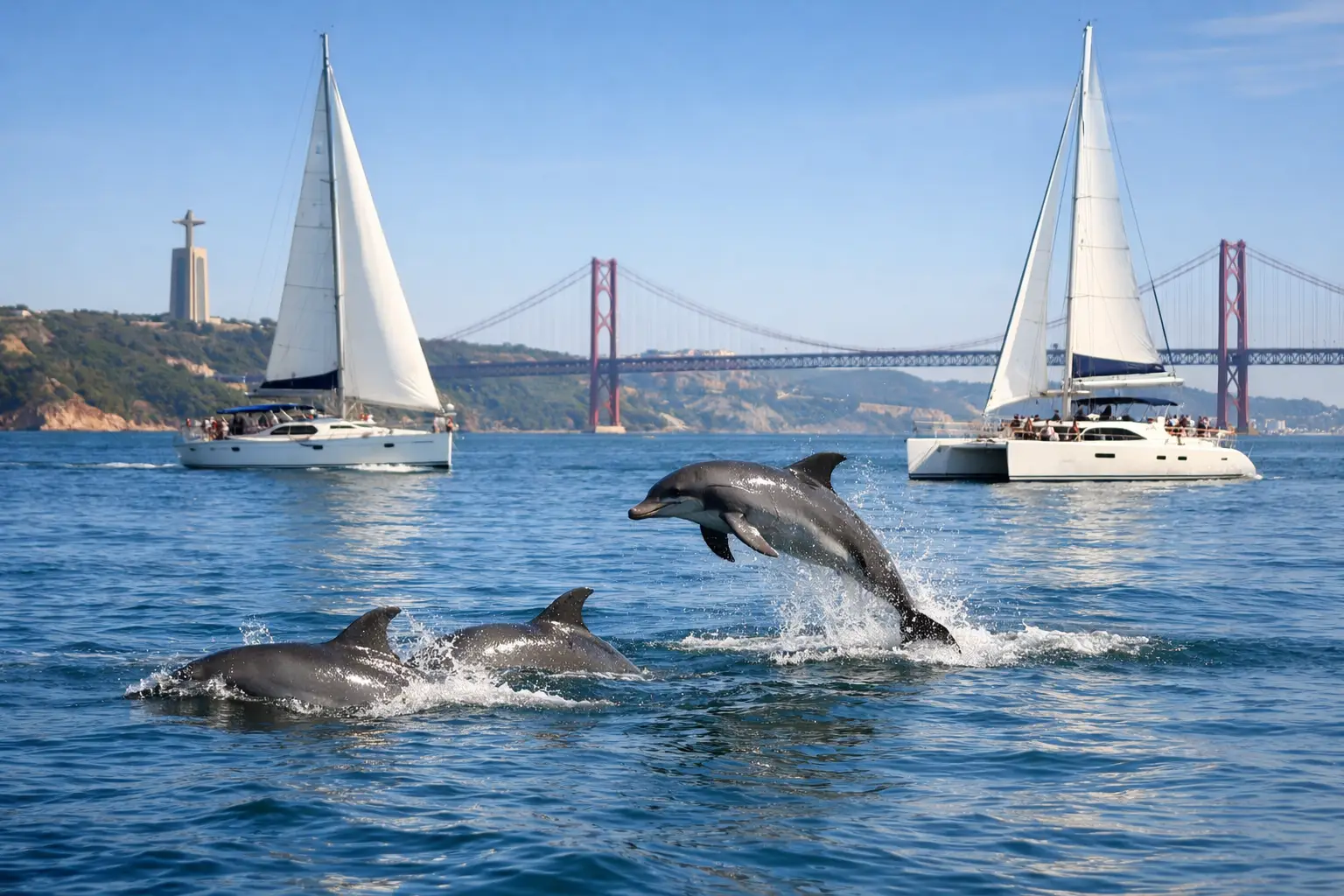
Lisbon’s waterfront can surprise you. One minute you are watching the 25 de Abril Bridge glow in the late-afternoon light; the next, someone on deck may point toward a small fin breaking the surface. So, can you see dolphins in Tagus River? Yes, dolphins are occasionally seen in the Tagus Estuary and farther out toward the river mouth – but a sighting is a wonderful bonus, never something any responsible boat tour should promise.
That unpredictability is part of the magic. The Tagus is a working river, a vast estuary, and a gateway to the Atlantic. It is not a dolphinarium or a dedicated wildlife-watching route. When dolphins do appear, the moment feels completely unscripted: a flash of movement beside the boat, a brief arc above the water, a shared burst of excitement from everyone on board.
Can You See Dolphins in Tagus River on a Lisbon Cruise?
You can, particularly in the broad, tidal waters near the mouth of the Tagus, where the river meets the Atlantic influence. Dolphins may enter the estuary to feed or travel through the area, and crews who spend their days on the water do sometimes spot them. However, timing matters, sea conditions matter, and nature does not work to a sightseeing schedule.
The most likely animals reported around the Lisbon coast and estuary are dolphins, including bottlenose dolphins and common dolphins. They are highly mobile, following food and responding to tides, currents, boat traffic, and conditions beyond anyone’s control. A boat may have a thrilling sighting one afternoon and none at all the following day on the same route.
For visitors, the key is to book a Tagus experience because you want the complete Lisbon-from-the-water feeling: the river breeze, iconic skyline, relaxed hospitality, and beautiful light. If dolphins join the scene, that is the kind of holiday story you will keep telling long after you leave Portugal.
Why Dolphins Visit the Tagus Estuary
The Tagus Estuary is one of western Europe’s most significant estuarine environments. Its mix of fresh and salt water supports fish, birds, and other marine life, creating a landscape that can attract dolphins as they search for food or move between coastal areas.
From the city-facing river, the water can look calm and urban, framed by historic neighborhoods, monuments, ferries, and bridges. Yet it remains connected to a much larger Atlantic ecosystem. This is why wildlife sightings are possible even so close to Lisbon.
That said, the river is also busy. Commercial vessels, commuter traffic, fishing activity, recreational boats, and changing tides all shape the environment. Dolphins are wild animals with their own patterns. They may be active farther offshore while your boat is enjoying perfect views near Belém, or they may pass through at a time when few boats are nearby.
When Are You Most Likely to Spot Them?
There is no guaranteed dolphin season in the Tagus River, and anyone claiming one should be treated with caution. Sightings can happen at different times of year. The most favorable conditions are generally those that make the water easier to observe and encourage comfortable time outside: clear visibility, manageable wind, and calmer surface conditions.
Morning and late afternoon can be especially enjoyable for watching the water because the light is softer and the atmosphere is less harsh than at midday. A sunset cruise adds another layer to the experience. As Lisbon’s hills turn gold and the sky shifts through pink, orange, and blue, guests are naturally looking out across the river rather than rushing between attractions on land.
Still, sunset is not a dolphin guarantee. It is one of the best ways to experience Lisbon, with or without wildlife. If your travel plans are flexible and seeing dolphins is especially important to you, spending more than one day near the waterfront and taking a longer coastal-oriented outing can improve your chances, but it cannot turn a possibility into a promise.
What a Dolphin Sighting Looks Like From the Water
Real dolphin sightings are often quick. You may see a fin surface once, then again a few yards away. A small group may travel alongside the boat for a moment, or they may vanish below the surface before everyone has reached for a camera.
This is why it helps to stay present rather than watching the entire cruise through a phone screen. Keep an eye on the water, especially when the boat is moving through open stretches of the estuary. If the crew notices activity, listen for their guidance and look in the direction they indicate.
A good skipper knows the river and can recognize when something unusual is happening on the surface. But experienced crews also know not to chase wildlife. The best encounters happen at a respectful distance, with the boat’s route and the animals’ space treated with care.
Choose the Cruise for Lisbon, Not a Wildlife Promise
For most visitors, a boat cruise on the Tagus is one of the most memorable ways to see the city. From the water, Lisbon opens up differently. You can take in the scale of the 25 de Abril Bridge, the riverfront silhouette of Belém, the Monument to the Discoveries, and the city’s layered hills without traffic, crowded sidewalks, or a rushed itinerary.
A shared sailing experience is ideal if you want an easy, social outing with the energy of fellow travelers and the glow of the city at sunset. A private sailboat or catamaran makes more sense for couples, families, close friends, or groups celebrating a special occasion and wanting extra space, flexible hosting, and a more personal atmosphere.
Rent a Boat creates these experiences around the things that can be planned beautifully: a welcoming crew, comfortable boats, excellent views, music, food and wine options, and the kind of sunset photographs that make everyone back home wish they had joined you. A dolphin sighting is never the product. It is the rare, extraordinary extra that can make an already unforgettable cruise even more special.
How to Be Ready if Dolphins Appear
Bring a light jacket even on a warm Lisbon day. Conditions on the river can feel cooler than they do in the city, especially after sunset, and staying comfortable means you are more likely to remain outside enjoying the view.
Keep your camera or phone ready, but do not expect a perfect close-up. Use a faster photo setting if your device has one, and avoid leaning over railings or moving suddenly around the boat. Your safest and best memory may be a short video of the water, the skyline, and everyone’s delighted reaction rather than a frame-filling wildlife shot.
Most importantly, let the crew lead. Do not call out, throw food, or attempt to attract the animals. Dolphins do not need an audience to perform, and their welfare comes before a photo. Respectful observation protects the very sense of wonder people come to the river hoping to find.
A Better Way to Set Expectations
If you are planning a Lisbon trip around a strict must-see wildlife list, the Tagus may not be the right place to rely on for dolphins alone. A specialized marine wildlife trip in a more offshore setting can be a better fit for that single goal. But if you want a premium city experience with genuine potential for a spontaneous nature moment, the Tagus is hard to beat.
Plan your river cruise around the sunset, the landmarks, and the pleasure of slowing down together on the water. Then look out across the wake, stay curious, and leave room in your Lisbon itinerary for the kind of surprise that cannot be booked.
You might also like:

Plan a Conference Networking Cruise in Lisbon
22 de October, 2026
Plan a conference networking cruise in Lisbon with sunset views, hosted drinks, and relaxed space for conversations your guests will remember long after.
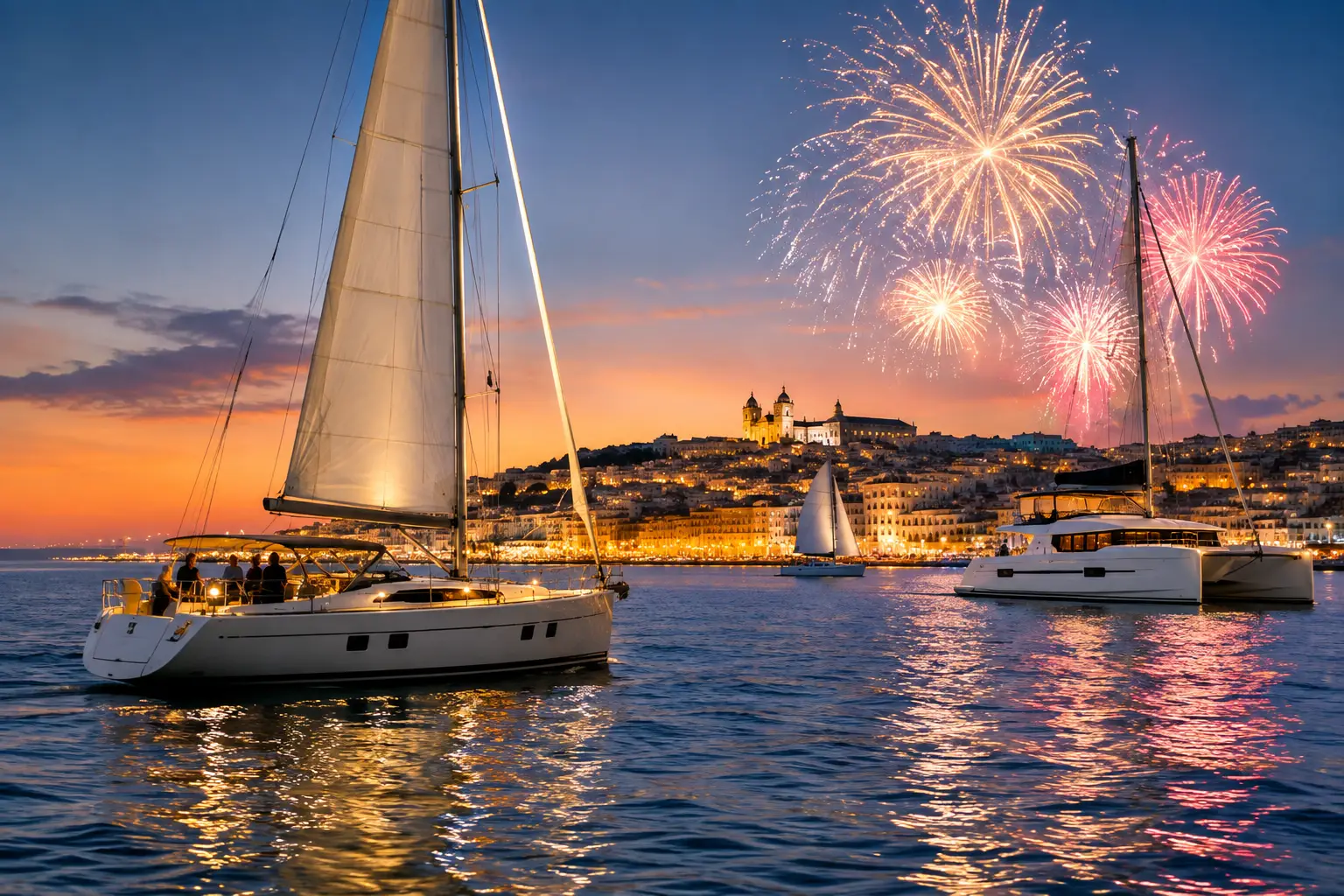
Best NYE in Lisbon for a Night to Remember
21 de October, 2026
Plan the best NYE in Lisbon with fireworks, river views, wine, and a relaxed private or shared cruise on the Tagus. Make midnight unforgettable for all.
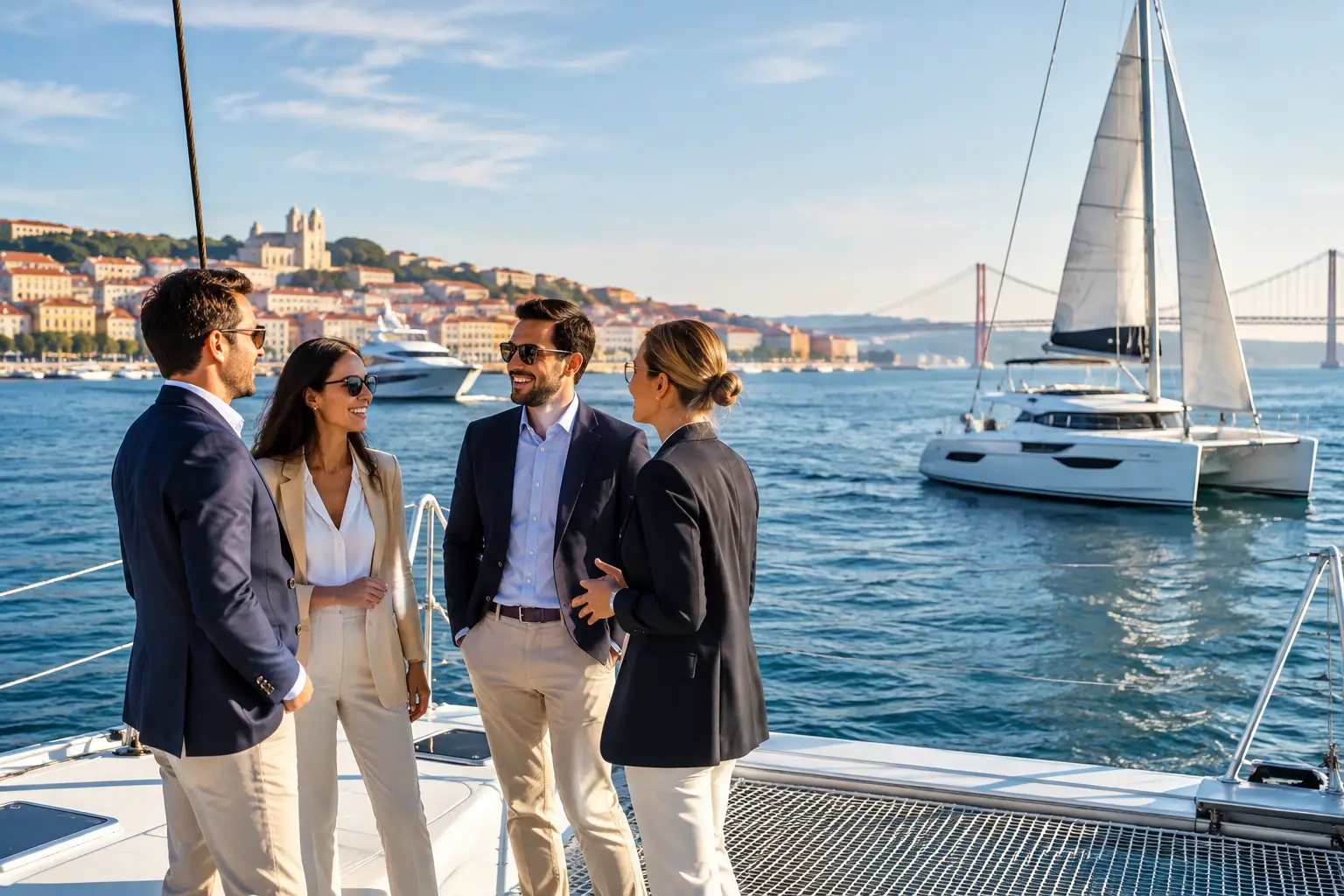
Corporate Cruise Planning Guide Lisbon in 7 Steps
20 de October, 2026
This corporate cruise planning guide Lisbon teams can use covers boats, timing, guest comfort, catering, and contingencies for a memorable event afloat.
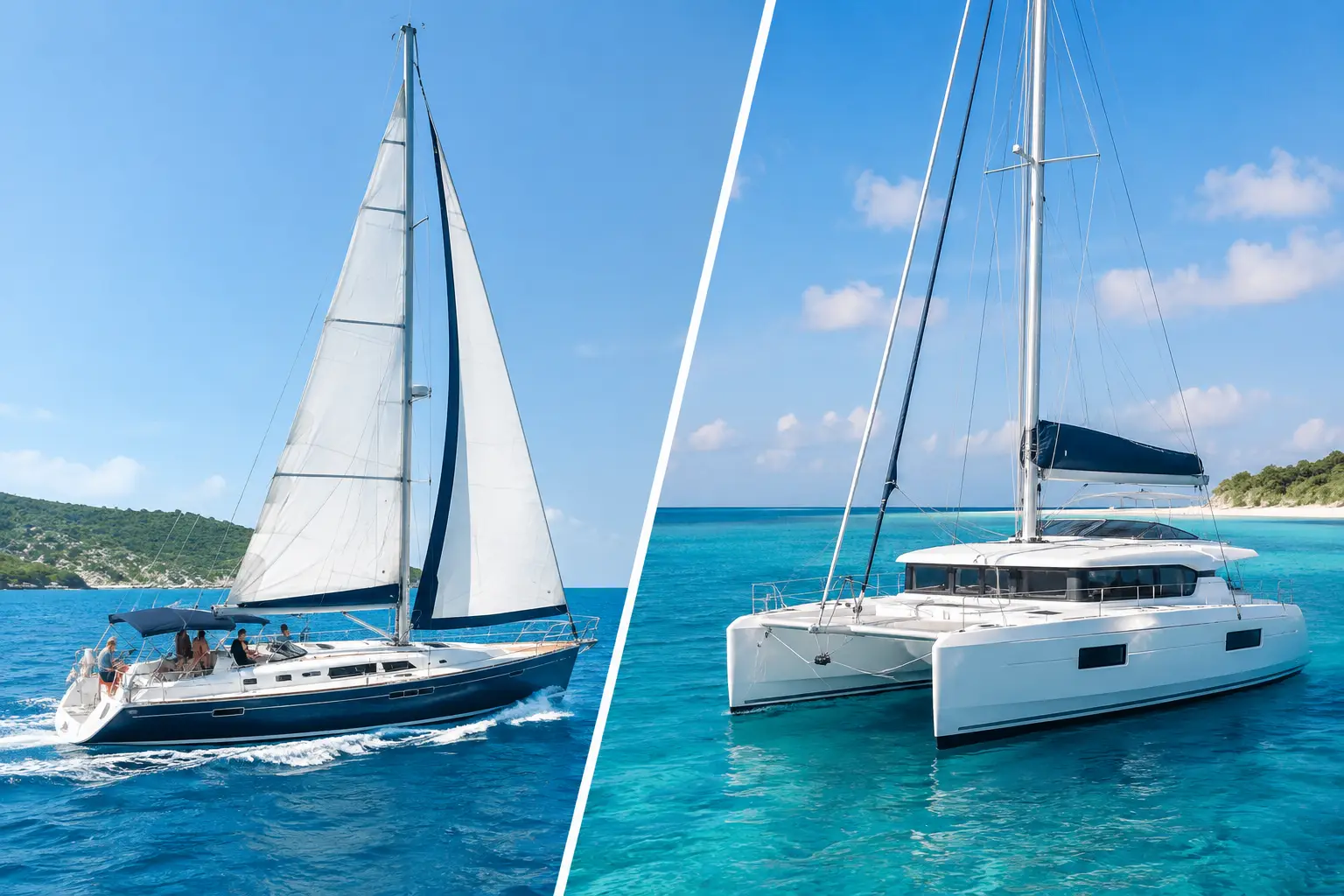
Shared Cruise vs Private Charter: Which Fits?
19 de October, 2026
Compare a shared cruise vs private charter in Lisbon and choose the right Tagus experience for your sunset, celebration, family, or group with confidence.
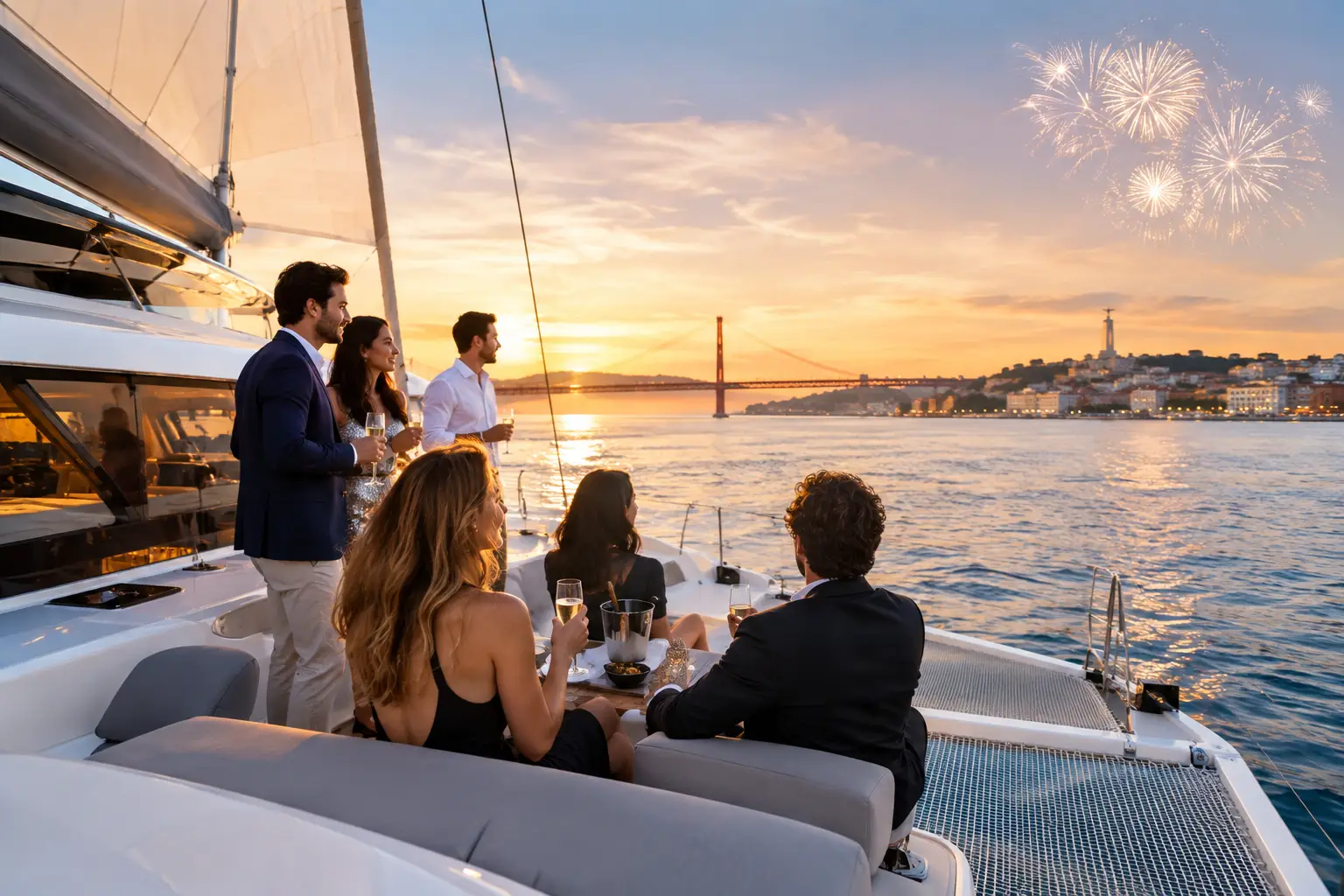
Celebrate NYE on a Luxury Catamaran in Lisbon
18 de October, 2026
Plan NYE on a luxury catamaran in Lisbon with skyline views, warm hospitality, drinks, music, and a front-row place for midnight fireworks on the Tagus.

Team Building on a Luxury Catamaran in Lisbon
17 de October, 2026
Plan team building on a luxury catamaran in Lisbon with skyline views, relaxed hospitality, and a private River Tagus cruise your team will remember again.
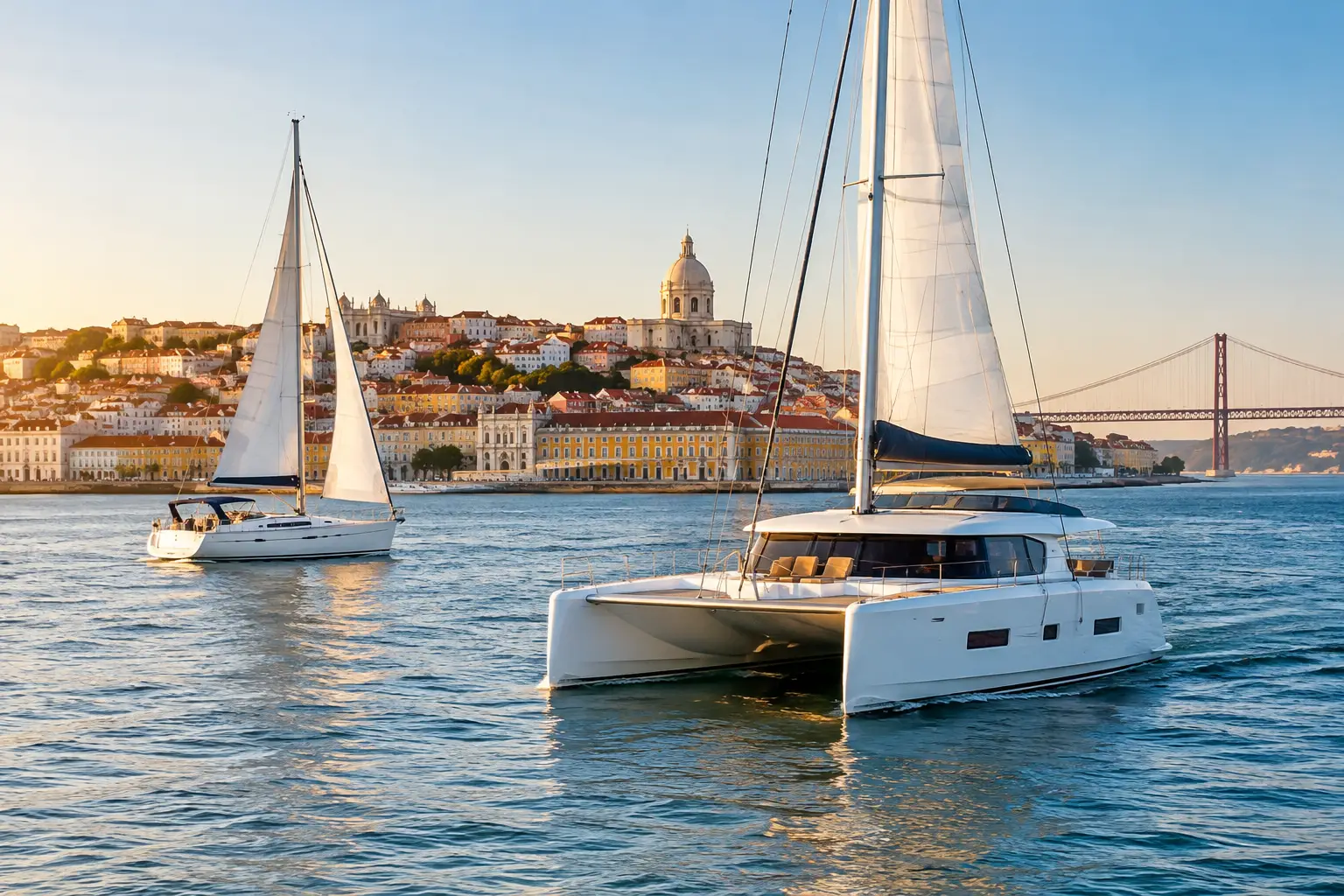
How to Select Cruise Departure Times in Lisbon
16 de October, 2026
Learn how to select cruise departure times in Lisbon for sunset views, calm water, easy travel plans, and the right shared or private boat experience.
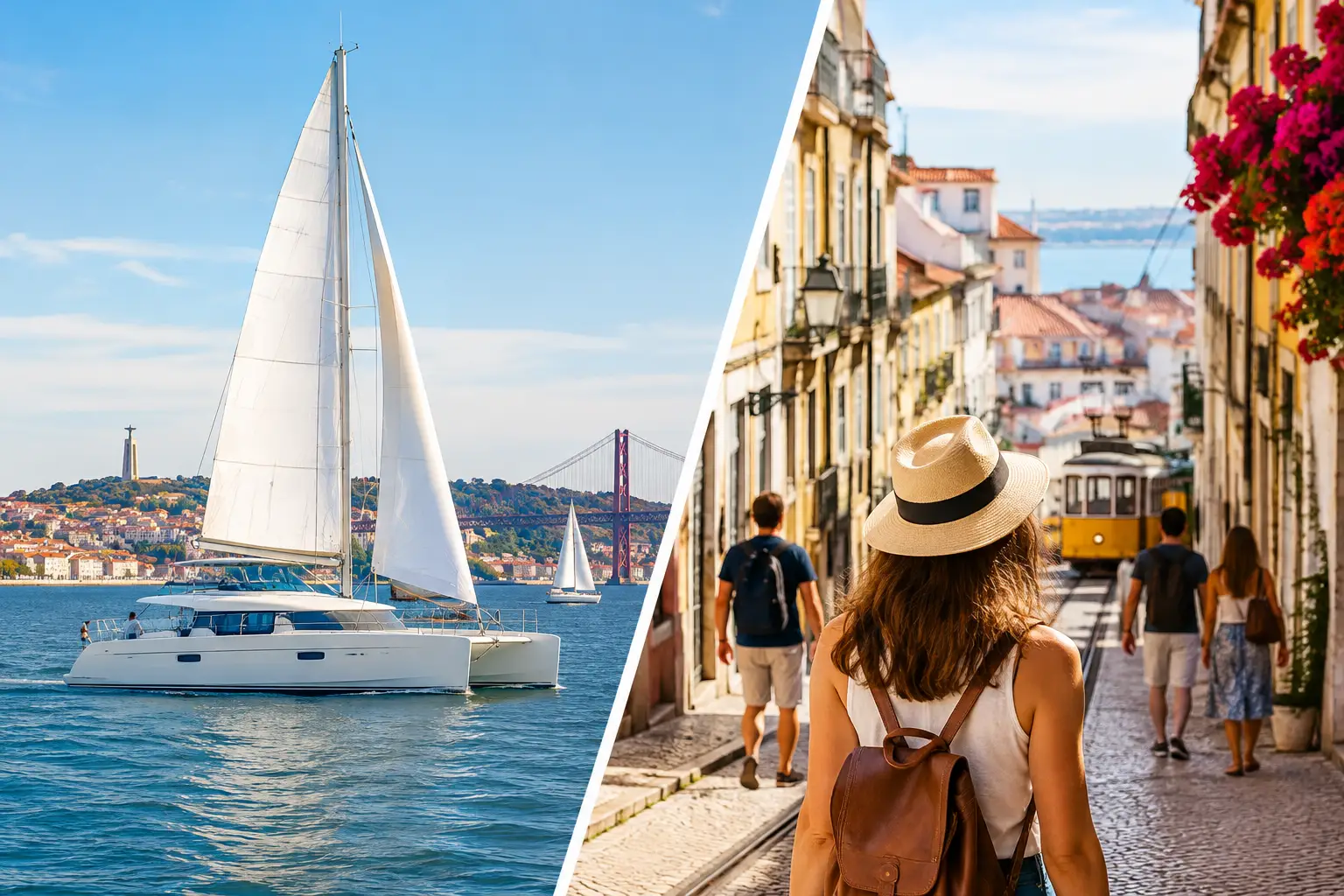
River Cruise Versus Walking Tour in Lisbon
15 de October, 2026
River cruise versus walking tour in Lisbon: compare views, pace, comfort, and local atmosphere to choose the experience that suits your Lisbon trip best.
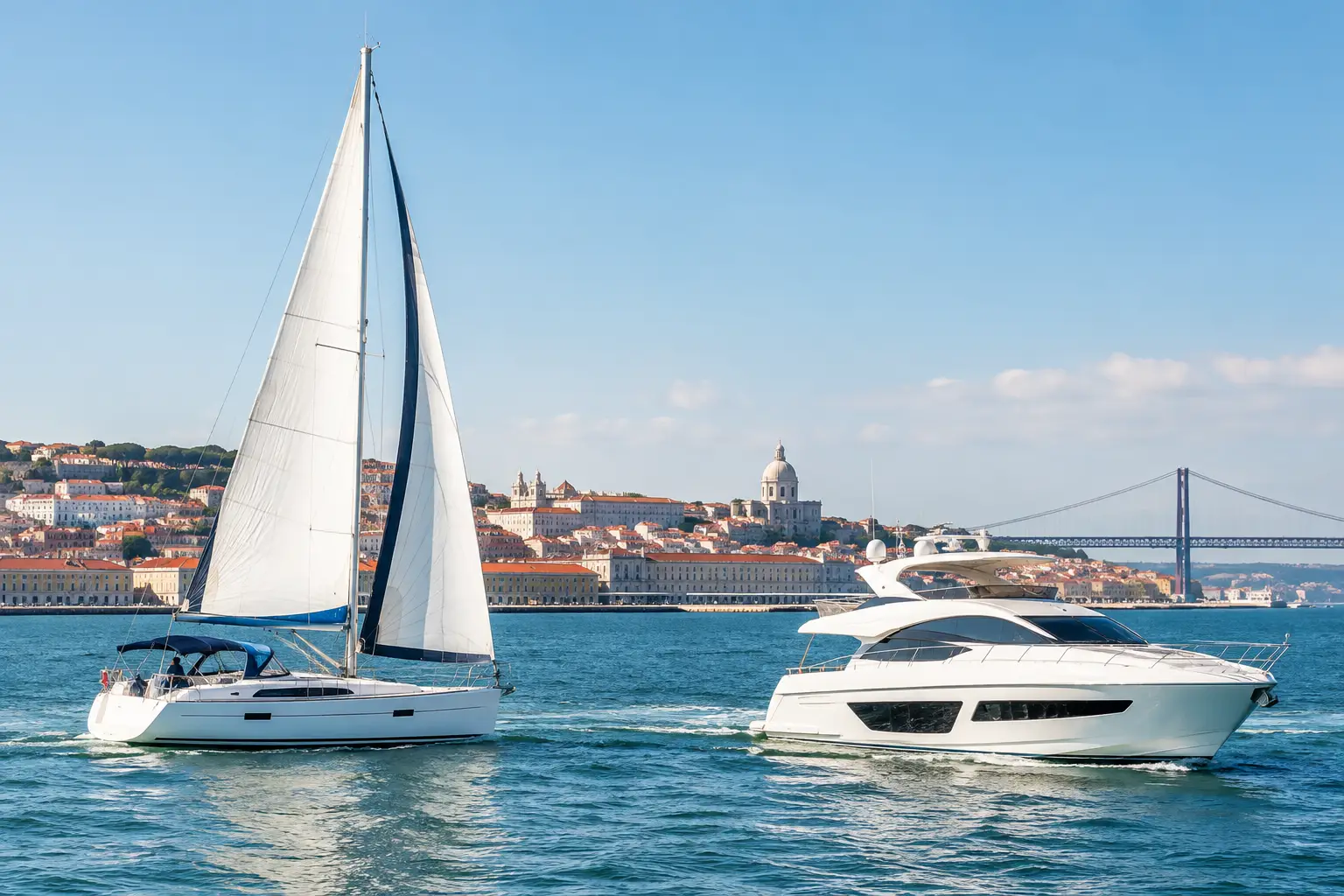
Sailboat Versus Motorboat Experience in Lisbon
14 de October, 2026
Compare the sailboat versus motorboat experience in Lisbon to choose the right river cruise for sunset, sightseeing, celebrations, and comfort aboard.
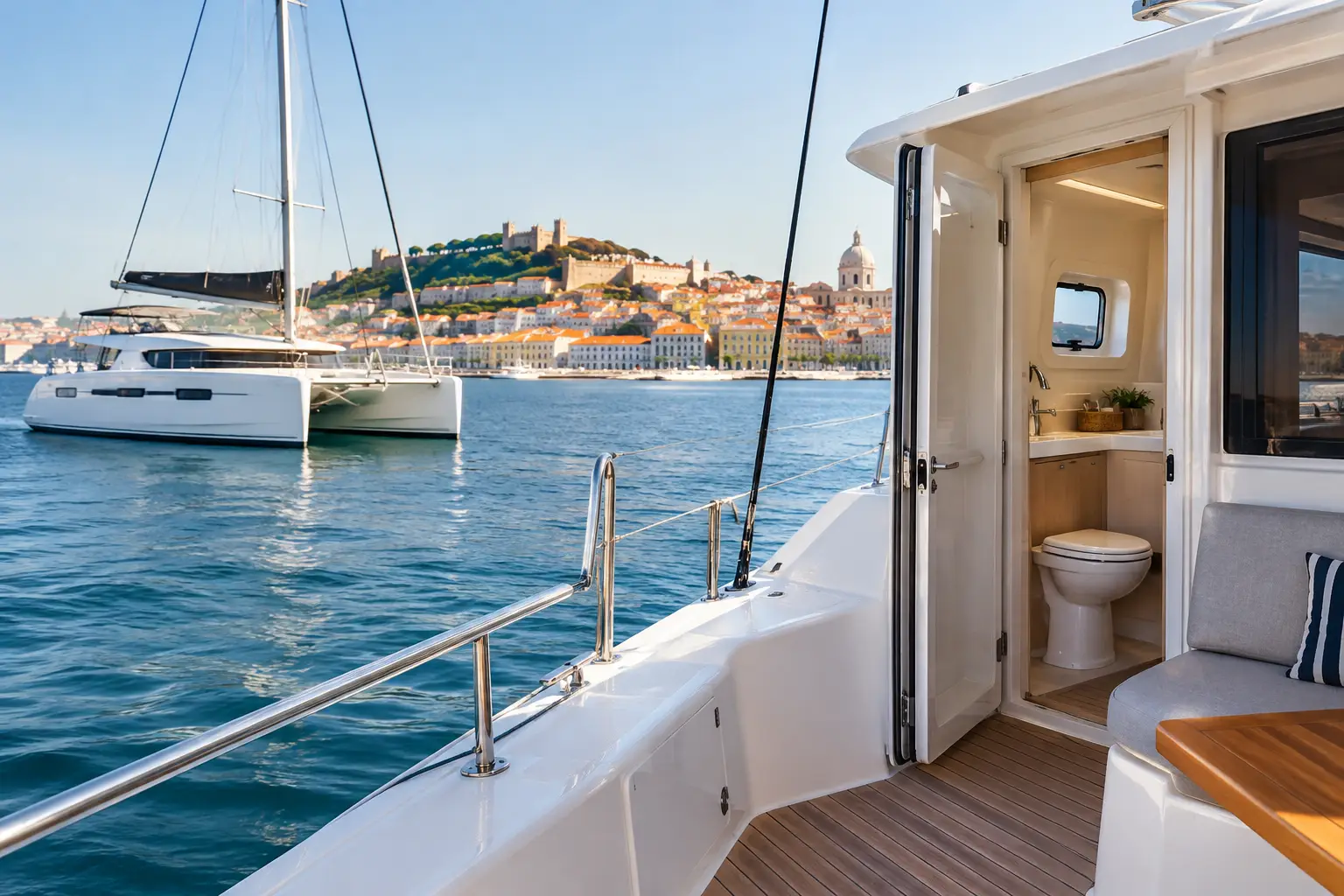
Boat Toilet Availability: What to Expect in Lisbon
13 de October, 2026
Boat toilet availability matters when choosing a Lisbon cruise. See which boats have restrooms, what to ask before boarding, and how to plan in comfort.
2022 © Rent a Boat. Resolution of consumer conflicts
Developed by Inovlancer